Vegetarian in Japan: what to know before you go
Hidden fish stock, dishes worth looking for, and a Japanese phrase to keep on your phone. A practical guide to eating vegetarian in Japan.


“No meat” doesn’t always mean vegetarian.
That’s one detail worth knowing before your first meal in Japan. A dish can arrive full of vegetables, noodles or tofu and still contain fish or meat in its broth, sauce or toppings.
You can absolutely enjoy Japan as a vegetarian. A little preparation helps you spend less time decoding menus and more time enjoying what’s on the table.
Watch out for dashi
Dashi is a stock used as the base of many Japanese dishes. A common version combines kombu seaweed with bonito, a fish. Plant-based versions exist too, so the useful question is what the dashi is made from. Japan’s official tourism guide explains the ingredients.
When ordering, ask about the whole dish: the stock it’s cooked in, the sauce served alongside it, and anything sprinkled on top. Simply asking for the meat to be removed may leave those ingredients in place.
What to look for
These are useful starting points when you’re scanning a menu:
- Vegetable tempura
- Inari sushi
- Edamame
- Rice dishes
- Tofu dishes
- Shojin ryori
Always check the broth, sauces, toppings and other ingredients.
With vegetable tempura, ask about the dipping sauce as well as the batter. With inari sushi, check how the tofu pockets are seasoned. For rice and tofu dishes, ask about any stock, sauce or fish toppings. Plain salted edamame and plain steamed rice are simple options to look for.
Shojin ryori is traditional Buddhist vegetarian cuisine, worth seeking out for a meal built around vegetables and ingredients such as tofu. If you avoid dairy too, confirm that when booking. JNTO’s vegetarian dining guide has more on what to expect.
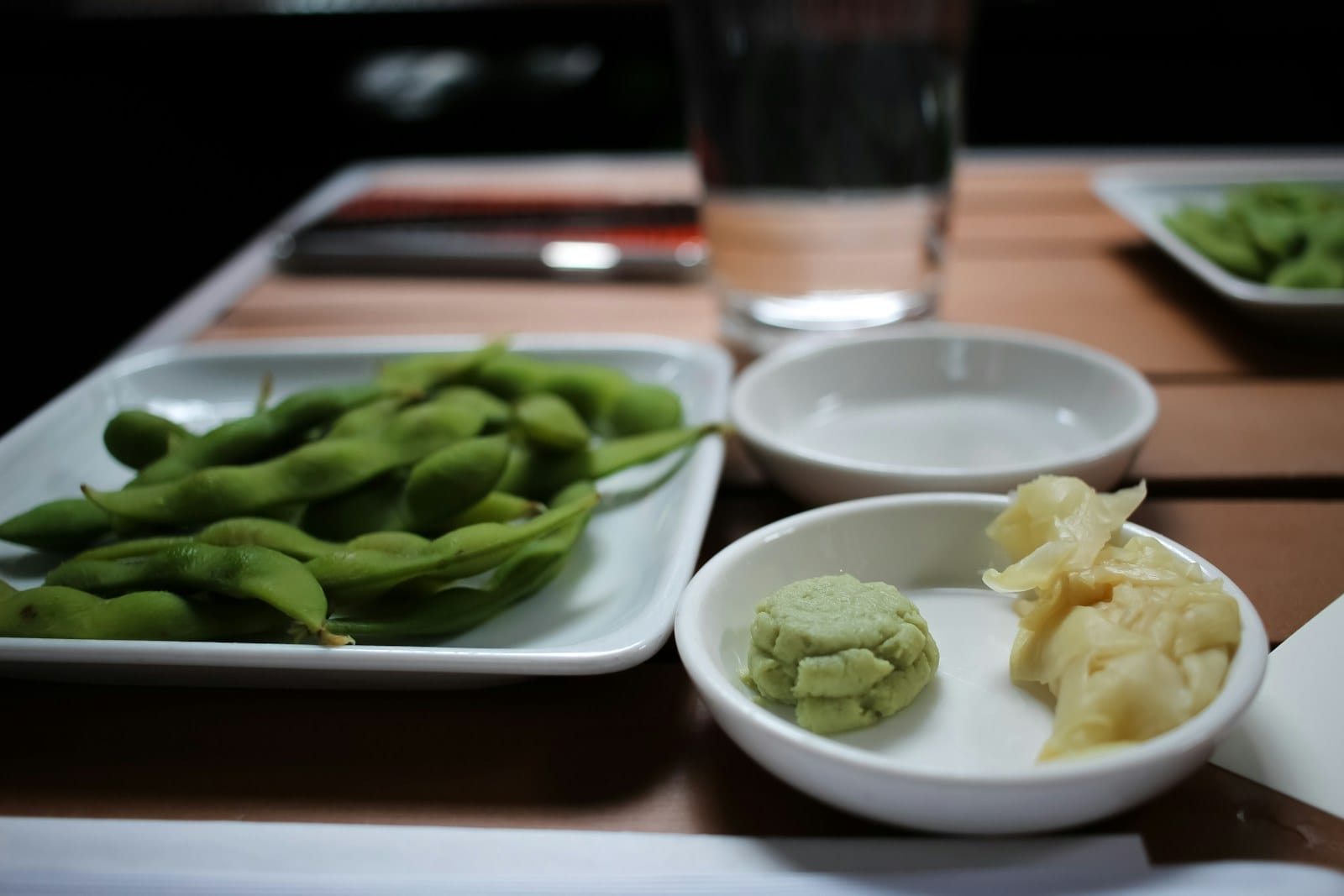
“Vegetarian” may not be enough.
If you don’t eat fish, meat or animal-based broth, say so clearly.
Tip: Carry a translated dietary card.
It’s easier than explaining at every restaurant.
Start with this simple phrase:
私はベジタリアンです。
Watashi wa bejitarian desu.
“I’m vegetarian.”
Then explain what that means for you. Save this card to your phone so it’s ready to show restaurant staff, even when you’re offline.
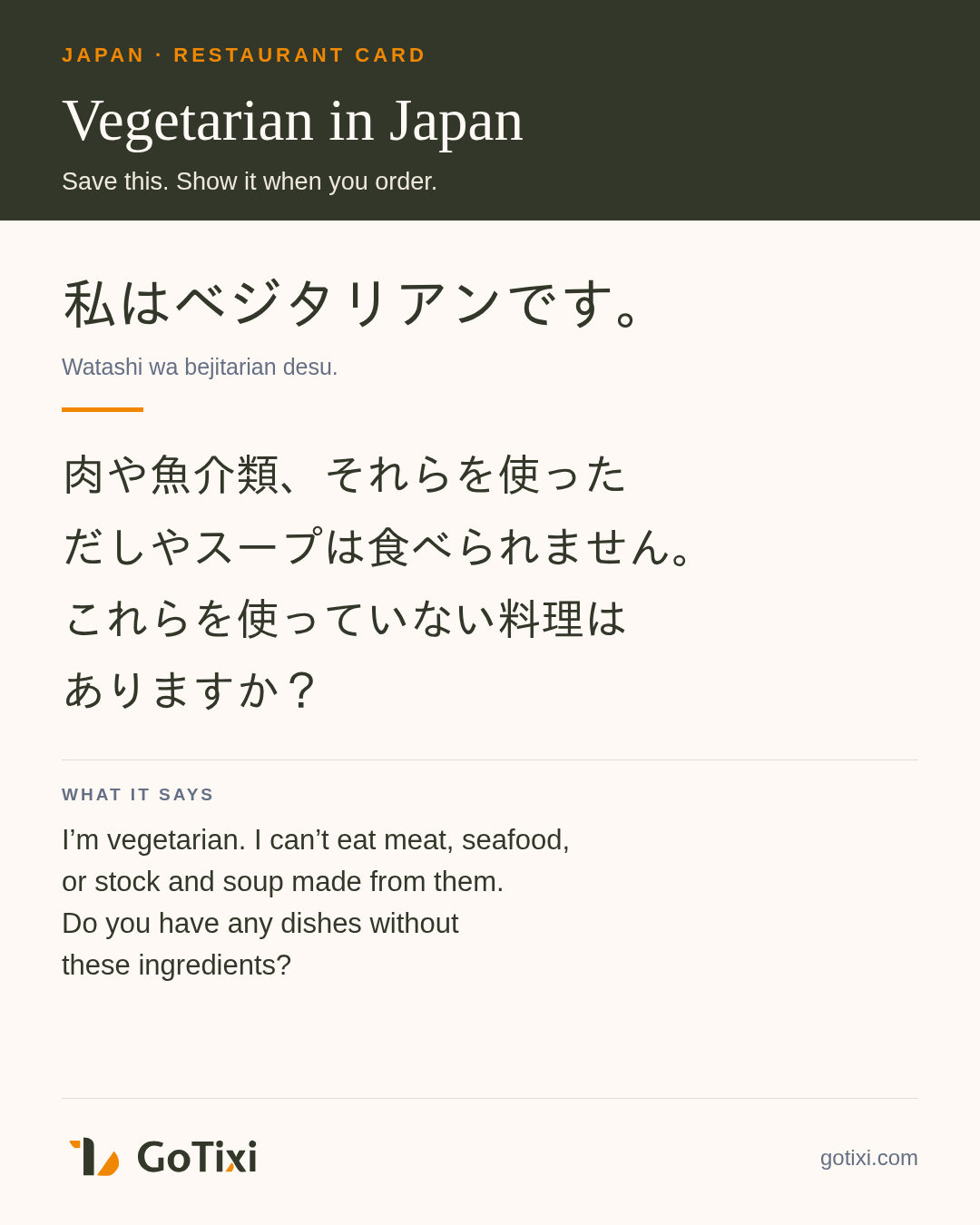
Open and save the Japanese restaurant card (PNG)
On your phone, open the image and press and hold to save it to Photos. On a computer, right-click the image and choose “Save image as”.
If you also avoid eggs or dairy, add that to your dietary card. The more clearly it describes what you eat, the more useful it will be.
Search before you’re hungry
Use Google Maps and HappyCow to shortlist places around your hotel and the neighbourhoods you’ll be exploring. Check recent menus and opening hours, and save a backup nearby.
You don’t need to schedule every meal. Having a few options ready means you can finish a long day of sightseeing without starting your restaurant search from scratch.
For accommodation that includes meals, explain your requirements when booking and ask whether they can accommodate them.
Go with a few saved restaurants, clear questions about ingredients, and that restaurant phrase within easy reach. A little planning leaves more room to enjoy the trip.
Save this for your Japan planning, and send it to the person you’ll be eating with.
We handle the details. You create the memories.