New Zealand Beyond Summer
Spring and autumn bring a gentler pace, changing landscapes and more room to make New Zealand your own.

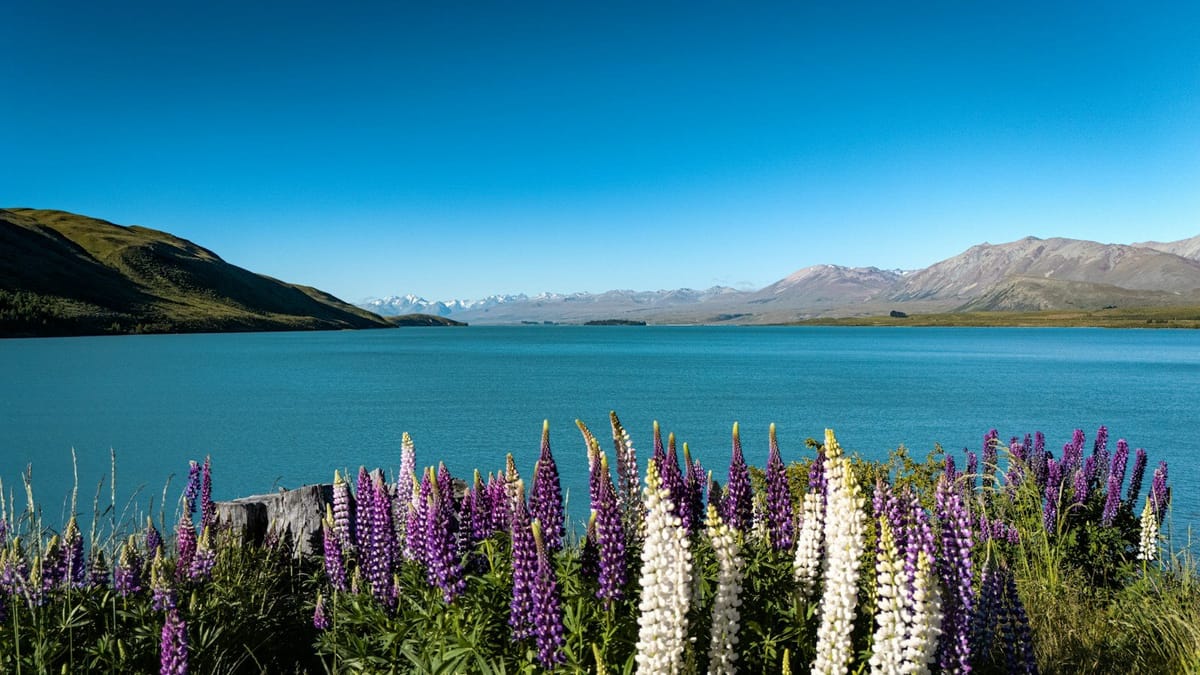
Most of us picture New Zealand in December: long golden evenings, glittering lakes, a road trip with the windows down. It's a lovely picture, and it's the one everyone else has too. Between November and March, the famous viewpoints and tracks are at their busiest.
The months on either side of summer offer an easier rhythm. Here is how we think about them.
When is shoulder season?
New Zealand's seasons run opposite to ours, so autumn is March to May and spring is September to November. The true shoulder months are April to May and September to October: the country is open, the light is soft, and the summer crowds haven't arrived or have already gone.
Which one suits you?
- Choose autumn (April to May) if you like slow days, hot pools, long lunches and wine country. Hawke's Bay and Martinborough are known for their autumn colour, and the cooler air suits walking the Abel Tasman coast.
- Choose spring (September to October) if you want wildflowers on the trails, rivers running high from snowmelt, and nature on the move. It is a good fit for families, with Hobbiton, rafting and wildlife all within reach.
Neither is a compromise. Each is New Zealand at a different moment, and the right one depends on who is travelling and what you want to feel.
What we like about travelling in between
More space at the places everyone wants to see
In peak summer, spots like Lake Tekapo, Milford Sound and Hot Water Beach can get very busy. In the shoulder months they tend to feel calmer, and the people running the lodges, cafés and activity desks often have more time to share what they love about their corner of the country. That kind of local advice is often the best part of a trip.
Landscapes with a story
Spring brings wildflowers, lambs in the fields and birds returning to the coast. Autumn brings generous daylight, big dramatic skies and seasonal colour in some regions. Both are good for hiking: the Tongariro Crossing, Abel Tasman and the Routeburn and Kepler tracks are all popular in these months.
Weather that is often easier to travel in
No season in New Zealand is predictable, and conditions change quickly. But cooler days are more comfortable for long drives and active days outdoors, and some parts of the South Island see less rain and wind outside midsummer. Pack layers and keep a few indoor ideas in reserve.
Wildlife with its own calendar
Timing matters here, and it can shape your dates. Sperm whales can be seen at Kaikōura throughout the year. Albatross nest at the Royal Albatross Centre on the Otago Peninsula from around September to November, which makes spring a good window. Orcas are most often seen from October to March.
Room to follow your curiosity
With more choice in stays and experiences, you can linger where a place deserves it, or change direction when a local suggests somewhere better. Many travellers say that is where the memorable moments come from.
More time with locals
In summer, many New Zealanders are busy with family or away on holiday themselves. Outside it, there is often more time for a conversation, a shared meal or a recommendation over a drink.
A few honest things to plan around
- School holidays still count. New Zealand's two-week school breaks fall at the end of April and in July and October, and popular places can be busy then. We plan around them.
- Days are shorter. Allow generous daylight for drives and don't overpack a day.
- Check your road rules. If you're hiring a campervan or motorhome, some operators restrict certain roads in the colder months, including ski-field access roads. Confirm your provider's rules and live road conditions before you set out.
- Events are worth checking. Festivals such as WOMAD in March or Wellington on a Plate in May can anchor a trip, but dates change, so confirm them first.
Let us help you choose
The right window depends on who is travelling, the pace you like, and what you hope to bring home. That's the part we enjoy working out with you. Tell us about your trip and we'll shape the route around your preferred pace, then take care of the practical details.
We handle the details. You create the memories.